Rising energy costs are squeezing manufacturing and industrial facilities like never before. You need a plan that cuts operating expenses without adding risk or complexity. Commercial solar for manufacturing offers a way to stabilize your energy budget, capture up to 30% federal solar tax credit, and stack bonus incentives that can cover most of your project cost. In this guide, you’ll learn how to map out a solar project that improves cash flow and locks in long-term savings. For more details, check out this complete guide to commercial and industrial solar panels.
Strategic Solar Planning for Industry

The journey to solar success begins with a well-thought-out plan. Let’s explore how to create a strategy that starts with finances.
Finance-First Approach to Solar
Understanding the financial landscape is crucial. By focusing on cost benefits first, you ensure that solar energy becomes a viable option. In this approach, you start by evaluating your current energy expenses. How much do you spend each month, and what savings can solar offer? It’s essential to look at both immediate savings and long-term benefits. For instance, your facility could cut electricity costs significantly by switching to solar. By calculating potential savings, you can make informed decisions that align with your budget. This is key to building a sustainable energy future.
Reducing Operating Expenses with Solar
Solar power offers a powerful tool to trim down your operating expenses. With solar, you generate your own electricity, reducing reliance on costly grid power. Imagine slashing your utility bills by a significant margin. That’s what solar brings to the table. Moreover, by generating power onsite, you avoid peak demand charges that can spike your bills. It’s all about turning expenses into savings. Many businesses report a noticeable drop in their monthly energy costs after installing solar panels. With this reduction, you have more funds to reinvest in your core operations.
Incentives and Tax Credits Explained
Incentives can cover a substantial portion of the solar project. By tapping into federal and state programs, you maximize financial benefits. But how do these incentives work? The key is understanding available options. Incentives like tax credits and rebates lower the overall cost of your solar installation. They make the project financially attractive. By exploring these options, you uncover ways to enhance your bottom line. The longer you wait, the more you risk missing out. Take the time to study these financial boosters and make solar work for you.
Incentives and Financial Benefits
Let’s dive deeper into the financial perks that solar energy brings to your facility.
Federal Solar Tax Credit 30%
The federal solar tax credit is a game-changer. It allows you to deduct 30% of the cost of installing solar from your federal taxes. This credit applies to both commercial and residential projects. For businesses, it means substantial savings. Imagine paying less in taxes just by going solar. This credit is available for a limited time, so it’s wise to act soon. The benefits extend beyond the initial installation, providing long-term financial relief. By leveraging this credit, you make your solar project more affordable and financially appealing.
IRA Solar Incentives Overview
The IRA offers incentives that further enhance solar affordability. These incentives come in different forms, including tax deductions and grants. They encourage businesses to adopt clean energy solutions. By taking advantage of these programs, you reduce the upfront cost of solar installations. It’s like getting a discount on your solar project. This makes it easier for businesses to transition to renewable energy. Many companies have successfully used these incentives to lower their energy expenses. With the right approach, you can too.
Understanding Solar MACRS Depreciation
MACRS depreciation is another financial benefit. It allows businesses to recover solar project costs through tax deductions. Over five years, you can depreciate the value of your solar installation, reducing taxable income. This results in lower taxes and increased cash flow. It’s a strategy that enhances the financial appeal of solar investments. By spreading the cost over time, you make solar more manageable for your budget. Explore MACRS and see how it complements other incentives for maximum savings.
Tailored Solutions for Manufacturing

Let’s explore solar solutions that fit your facility’s unique needs.
Rooftop and Ground Mount Options
Rooftop solar is perfect for facilities with ample roof space. It turns unused areas into power generators. But not every facility has suitable roofs. That’s where ground mount systems come in. They offer flexibility, allowing solar installations on open land. Both options have their advantages. Rooftop systems are space-efficient, while ground mounts provide scalability. By assessing your facility’s layout, you choose the best fit. Each solution offers the power to transform your energy profile.
Warehouse Solar Installation Tactics
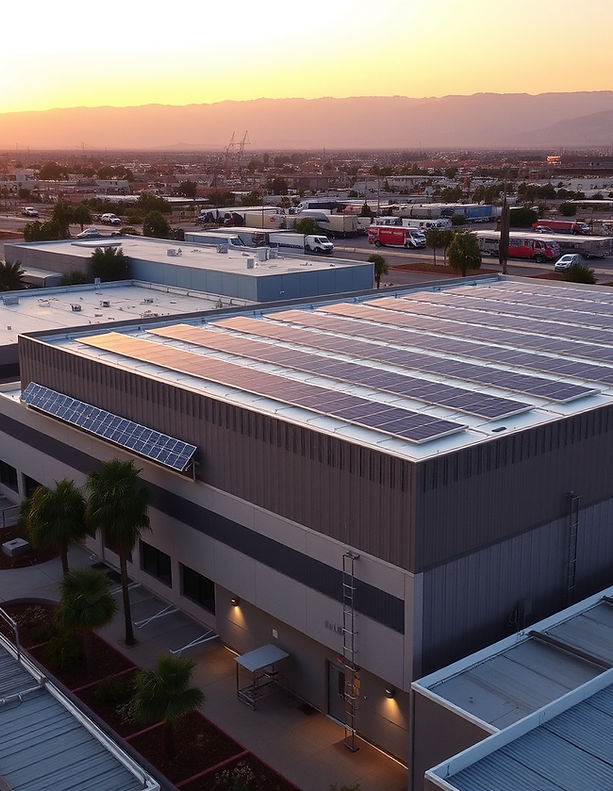
Warehouses often have large, flat roofs ideal for solar panels. Installing solar on your warehouse can significantly reduce your energy costs. The key is optimizing panel placement for maximum sun exposure. Proper installation ensures panels capture the most sunlight. This leads to higher energy production and savings. Additionally, warehouses can use storage systems to manage energy better. By pairing solar with storage, you control energy use and avoid peak charges. Upgrade your warehouse with solar and see the difference.
Demand Charge Reduction Strategies
Demand charges can take a toll on your energy budget. Solar helps mitigate these charges by reducing grid dependency. By generating your own power, you minimize the need for expensive grid energy during peak times. Another strategy is using batteries. They store excess solar energy for later use. This helps manage demand charges effectively. With these strategies, you stabilize energy costs and protect your bottom line. It’s about smart energy management for long-term savings.
By exploring these solutions, you empower your facility to harness solar energy effectively. The result is reduced costs and a more sustainable energy future.