Executive Summary: Solar for Churches Just Got a Lot More Viable
Solar for churches and non-profits has historically been out of reach — and for good reason. When Centenary United Methodist Church approached Raya Solar, they faced a problem that had long discouraged non-profit organizations from going solar: as a tax-exempt entity, the church couldn’t directly claim the federal Investment Tax Credit (ITC) that makes commercial solar financially attractive. Like most churches, schools, and non-profits across California, Centenary assumed solar simply wasn’t economically viable for their organization.
Raya Solar proved otherwise.
By leveraging the direct-pay provisions introduced under the Inflation Reduction Act — provisions specifically designed to make tax-exempt entities eligible for federal clean energy tax credits — Raya structured a 72 kW DC solar EPC project that delivered Centenary a cash payment from the U.S. Treasury equivalent to the value of the ITC. The result: a fully installed solar energy system that paid for itself through stacked federal and state incentives, eliminating a major operating expense from the church’s budget and freeing those dollars for mission work.
The Challenge: Why Solar for Churches Was “Impossible” Before 2023
Centenary UMC, like thousands of religious institutions and non-profit organizations across Southern California, operates on a tight budget where every dollar spent on utilities is a dollar not spent on community programs, facilities maintenance, or staff. Rising electricity rates from Southern California Edison and LADWP had made energy costs an increasingly painful line item in the church’s annual budget.
The church had explored solar for churches options before. But every conversation ended the same way: “You’re tax-exempt, so the federal tax credit doesn’t help you. The numbers don’t work.”
This is a common — and outdated — misconception. Prior to 2022, the federal Investment Tax Credit could only be monetized by entities with federal tax liability. Churches, public schools, government agencies, and other 501(c)(3) and tax-exempt organizations were effectively locked out of the most valuable solar incentive available.
The Inflation Reduction Act changed that. Under IRS Section 6417 direct-pay provisions, solar for churches and non-profits became genuinely viable for the first time. But most solar companies still don’t know how to structure projects to capture these new provisions.
The Raya Approach: Structuring a Non-Profit Solar Project for Maximum Value
When Centenary’s leadership team contacted Raya Solar, our team immediately recognized the opportunity: this wasn’t a project where solar for churches “didn’t work” — it was a project where the standard solar industry approach didn’t work. A different structure was needed.
Step 1: Direct-Pay Eligibility Analysis
Raya’s project development team analyzed Centenary’s tax status, organizational structure, and project siting to confirm full eligibility for IRA direct-pay provisions under IRC Section 6417. Because the church was a qualifying tax-exempt entity, the federal Investment Tax Credit could be received as a direct cash payment from the IRS rather than as a tax offset — making solar for churches economically transformative.
Step 2: System Design Optimized for Load and Roof Geometry
Our engineering team designed a 72 kW DC rooftop solar system sized to match the church’s annual electricity consumption profile, accounting for sanctuary HVAC, fellowship hall events, office operations, and outdoor lighting. The system was engineered to maximize self-consumption while complying with Los Angeles Department of Water and Power (LADWP) interconnection requirements under Rule 21.
Step 3: Incentive Stacking for Non-Profit Solar Projects
Beyond the federal ITC direct-pay structure, Raya identified and captured additional incentives that further reduced the church’s net project cost. The cumulative incentive stack covered the substantial majority of project economics — turning what Centenary believed would be an unaffordable capital expenditure into a project that effectively paid for itself.
Step 4: Full-Service EPC Delivery
Raya self-performed all phases of execution under a single point of accountability — no subcontractor confusion, no finger-pointing between design firms and installers:
- Engineering: Structural analysis, electrical design, single-line diagrams, interconnection drawings
- Procurement: Tier 1 modules, bankable inverters, racking, BOS components
- Construction: In-house crews under our Cal/OSHA-compliant IIPP safety program
- Commissioning: System testing, utility interconnection, monitoring activation
- Documentation: All paperwork required to file for direct-pay reimbursement through IRS Form 990-T and Form 3800
The Result: A Six-Figure Government Check and Zero Utility Bills
“As a church, our non-profit status previously [exempted] our ability to get tax incentives for solar. RAYA helped us get a check from the government that paid for our system, saving hundreds of thousands.”
— Pastor Ki, Centenary United Methodist Church, Los Angeles, CA
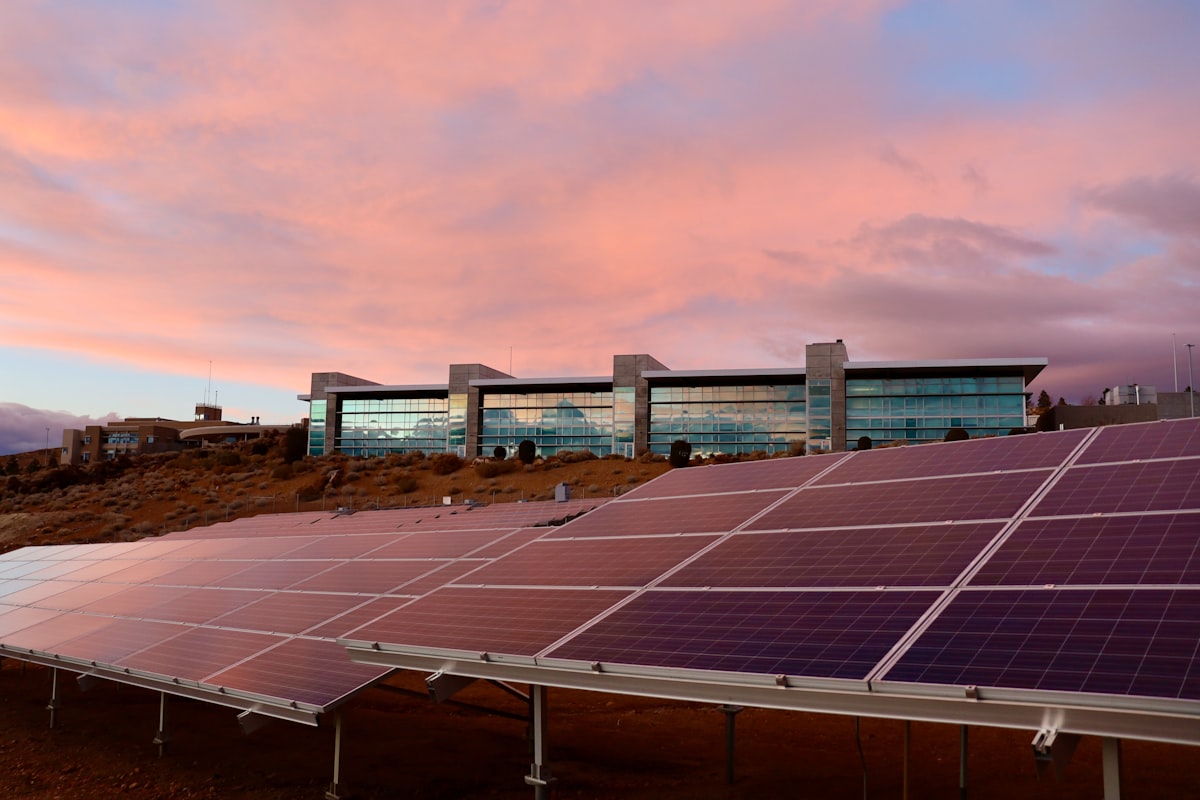
The 72 kW DC system now generates clean electricity for the church’s operations, dramatically reducing or eliminating monthly utility bills. The federal direct-pay reimbursement returned a six-figure cash payment to the church, and the project will continue to deliver savings for the system’s full 25-plus-year operational lifespan. This is the power of solar for churches when structured correctly.
Why Solar for Churches & Non-Profits Matters Now
If you operate a church, synagogue, mosque, school, university, non-profit, hospital, municipal facility, or any other tax-exempt entity, the Centenary project demonstrates a critical point: the Inflation Reduction Act made solar for churches and non-profits eligible for federal tax credits that you almost certainly couldn’t claim before 2023.
The direct-pay provisions are real, they’re substantial, and they’re available now — but capturing them requires a solar EPC partner who understands the structuring, documentation, and IRS filing requirements. Most solar companies don’t.
Raya Solar has now structured multiple solar for churches and non-profit projects to capture direct-pay benefits, including:
- Centenary UMC — Los Angeles, CA — 72 kW DC
- Los Altos UMC — Long Beach, CA — 60 kW DC
- Additional non-profit and religious institution projects across Southern California
What Raya Brings to Solar for Churches Projects
- Direct-pay structuring expertise — One of the few California solar EPCs with documented experience capturing IRA Section 6417 reimbursements for tax-exempt clients
- In-house full-service EPC — Engineering, procurement, construction, commissioning, and post-installation support delivered by a single accountable team
- CSLB License #1038437 (via parent company National Energy Installers, LLC)
- Comprehensive insurance — Commercial general liability, automobile, workers’ compensation, and umbrella coverage
- Code-compliant design and installation — Latest NEC, IEEE 1547, UL 1741, NFPA 855, and California Title 24
- 10+ GW of solar EPC delivered across commercial, industrial, municipal, and data center sectors through parent company NEI
Is Your Non-Profit or Church Solar-Eligible? Get a Free Assessment
If your organization is a 501(c)(3), 501(c)(4), religious institution, public school, municipal agency, or other tax-exempt entity in California, you almost certainly qualify for federal solar for churches direct-pay benefits — and you should be exploring solar now, before incentive structures change.
Raya offers a complimentary, no-pressure feasibility assessment for qualified non-profit prospects that includes:
- Direct-pay eligibility confirmation
- Preliminary system sizing and yield modeling
- Incentive stack analysis (federal ITC direct-pay, SGIP, state and utility rebates where applicable)
- Net project economics, cash-flow modeling, and 25-year savings projection
- Project timeline estimate
📞 310-876-2832 📧 hello@raya.solar 📍 Los Angeles, CA 90025
Raya Solar is a Los Angeles–based commercial and residential solar EPC and the data center microgrid infrastructure division of National Energy Installers, LLC. CSLB License #1038437. Member, Microgrid Consortium. This case study reflects services delivered by Raya Solar. Project specifics described herein are accurate to the best of our knowledge; testimonial quote provided by client and used with permission. Federal direct-pay eligibility and outcomes vary by project and organization — consult Raya and a qualified tax advisor for guidance specific to your situation.