Rising energy costs are squeezing your budget more than ever. Choosing the right turnkey commercial solar partner can turn those expenses into predictable savings while capturing federal solar tax credits and commercial solar incentives. This guide walks you through 10 essential questions to ask, so you won’t miss out on bonus depreciation solar benefits or IRA bonus credits—and can boost your commercial solar ROI with confidence. Read more.
Understanding Turnkey Commercial Solar
Choosing the right solar provider is crucial to maximizing your investment. A turnkey solution can make the transition smoother.
Key Benefits of Turnkey Solutions
Turnkey solar solutions offer a streamlined process from start to finish. Your provider handles everything, so you can focus on your business. This approach includes design, installation, and maintenance, reducing the hassle for you. It also eliminates the need to coordinate with multiple suppliers and contractors. With a single point of contact, you save time and avoid potential headaches.
Turnkey solutions also help ensure quality by using established procedures and experienced professionals. This means fewer surprises and more reliable performance. Plus, the financial benefits are clear. These solutions are often more cost-effective in the long run, as they reduce unexpected costs and delays.
Comparing Providers for Best Fit
Not all solar providers are created equal. It’s important to compare your options carefully. Look at each company’s track record and the quality of their installations. Don’t just go with the lowest price. Consider the value of their service and the expertise they bring to the table.
Ask about their experience with projects similar to yours. A provider with extensive experience in your sector is more likely to understand your specific needs. Also, check their reputation. Look for reviews from other businesses and ask for references to see how they handle past projects.
Importance of EPC Solar Partnerships
An EPC partnership is a key ingredient in a successful solar project. EPC stands for Engineering, Procurement, and Construction. These partnerships ensure that every step of the process is managed by experts. When your provider partners with a strong EPC, it means they can offer you high-quality materials and construction.
EPC partners bring together engineering know-how, procurement efficiency, and construction expertise. This combination can lead to a more efficient installation and better performance over time. It’s crucial to choose a provider that has strong EPC partnerships, as this can significantly impact your project’s outcome.
Navigating Solar Incentives

Understanding the available incentives can significantly reduce your solar project costs. Let’s explore what’s out there.
Federal Solar Tax Credit Unpacked
The Federal Solar Tax Credit is a big incentive for businesses going solar. It allows you to deduct a large portion of your solar costs from your taxes. This can make a huge difference in your return on investment. The credit helps offset the initial expense, making solar more accessible.
To qualify, you need to have your system installed by a certain date. It’s a great way to reduce your tax burden while investing in clean energy. Don’t miss this opportunity to save on your solar project.
Section 48 Investment Tax Credit Insights
Section 48 offers additional benefits for commercial solar projects. This credit is specifically for businesses and can further reduce your costs. The credit applies to a wide range of solar installations, making it versatile for various businesses.
It’s important to understand the specifics of this credit to maximize your savings. Discussing your project with a tax expert can ensure you don’t leave money on the table. By taking advantage of Section 48, you’re making a smart investment in your company’s future.
State and Bonus Credit Opportunities
States often provide their own incentives for solar projects. These can include tax credits, rebates, and grants. Combining state incentives with federal ones can significantly reduce your costs. It’s worth researching what your state offers and how you can qualify.
Bonus credits may also be available in certain areas. These credits can increase your savings even more. Be sure to ask your solar provider about any additional incentives you might be eligible for. Every bit helps in lowering the overall cost of your solar project.
Financial Implications and ROI
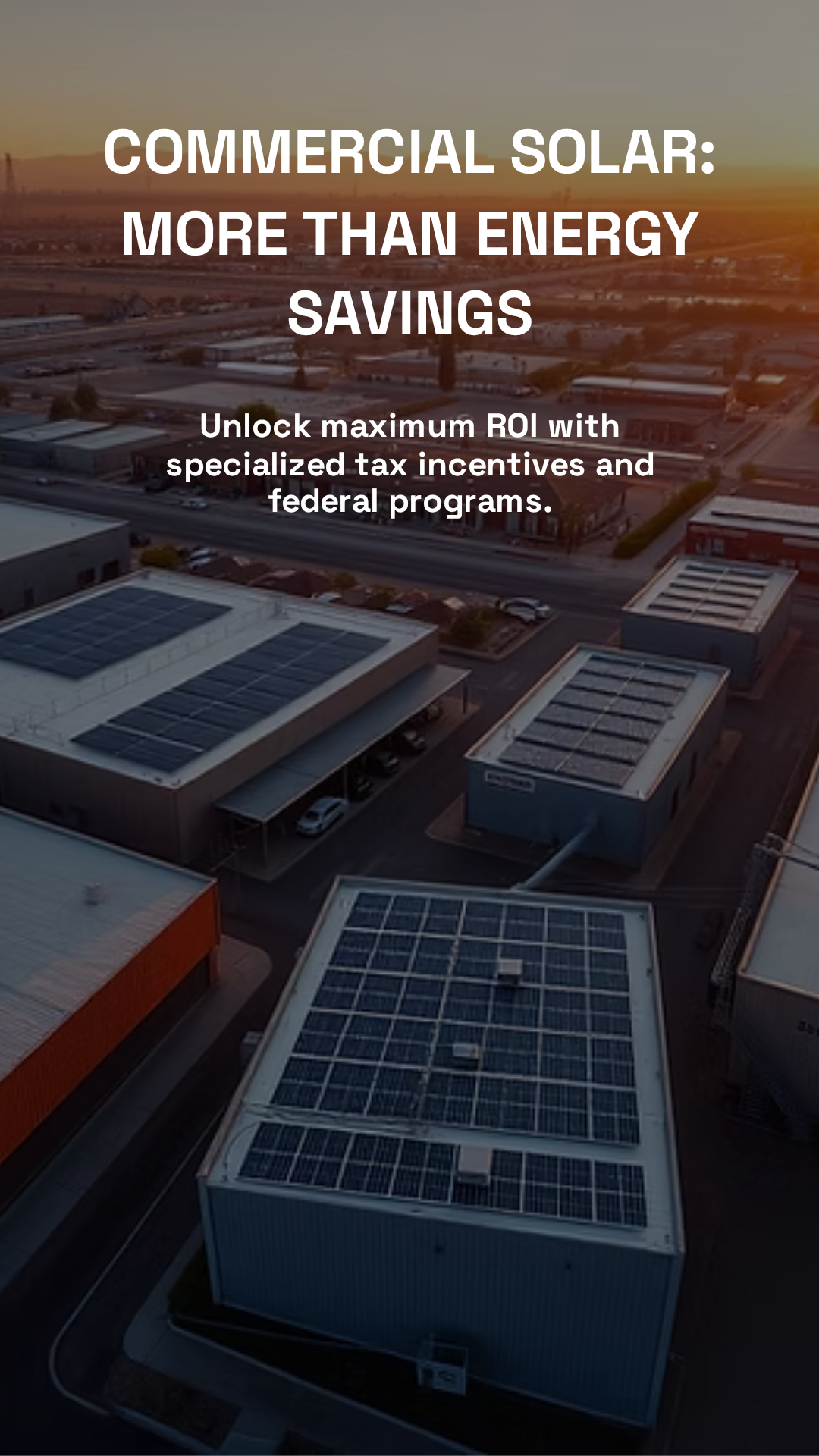
Understanding the financial aspects of solar is crucial for making an informed decision. Let’s break down what you need to know.
Calculating Commercial Solar ROI
The return on investment for solar can be impressive. To calculate it, consider your installation costs, available incentives, and projected energy savings. This will give you a clearer picture of when your investment will pay off.
With solar, you not only save on energy bills but also increase your property’s value. Over time, these factors contribute significantly to your ROI. Businesses often find that their systems pay for themselves in just a few years, making it a worthwhile investment.
Evaluating PPA vs Purchase Options
When financing solar, you have two main options: Power Purchase Agreements (PPA) and direct purchases. A PPA allows you to pay for the electricity generated rather than the system itself. This can reduce upfront costs and provide immediate savings.
On the other hand, purchasing a system outright gives you full ownership and all the associated benefits. Each option has its pros and cons, so it’s important to consider your financial situation and business goals. For a deeper dive into these options, check out this comprehensive comparison.
Cash Flow from Solar Explained
Solar can significantly improve your cash flow. By reducing or eliminating your electricity bills, you free up funds for other business needs. Over time, the savings can be substantial, contributing to a healthier financial position.
In addition to reduced energy bills, solar can also provide revenue through net metering. This program allows you to sell excess energy back to the grid, further boosting your cash flow. These financial benefits make solar an attractive option for businesses looking to improve their bottom line.
Frequently Asked Questions
What is a turnkey solar solution?
A turnkey solar solution means the provider handles all aspects of the project, from design to installation and maintenance. This approach simplifies the process for you and ensures a cohesive, high-quality result.
How do federal and state incentives work together?
Federal and state incentives can be combined to significantly reduce your solar project costs. The Federal Solar Tax Credit, coupled with state-specific programs, maximizes your financial benefits.
What should I consider when choosing a solar provider?
When choosing a solar provider, consider their experience, track record, and the quality of their installations. Also, look at their EPC partnerships, as these can affect the overall success of your project.
How do I calculate the ROI for a commercial solar project?
To calculate ROI, factor in installation costs, energy savings, and available incentives. This will help determine how quickly your investment will pay off and the long-term financial benefits.
What is the difference between PPA and purchasing a solar system?
A PPA involves paying for the electricity generated, while purchasing means owning the system outright. Each option has unique financial implications, so it’s important to consider your specific needs and goals.