Most commercial energy savings reports miss key details that reveal true financial benefits. You deserve a clear breakdown of commercial solar savings, federal solar incentives, and how these shape your payback period. This guide outlines exactly what your commercial energy savings report should include so you can make smart decisions and spot real opportunities to improve cash flow. For more information on energy efficiency strategies, visit this link.
Key Elements of a Savings Report
When diving into a commercial energy savings report, several key elements should be front and center. These elements are crucial to understanding how your energy costs can be reduced and how solar can play a role in that reduction.
Understanding Utility Bill Analysis
Your utility bills offer a wealth of information. Analyzing these bills helps identify patterns in energy use and potential areas for savings. This analysis allows you to see where you might reduce demand charges or cut wasteful energy use. For instance, examining peak usage times can reveal opportunities to shift energy-intensive activities to off-peak periods, saving money. Tools like the Building Energy Benchmarking Program can help you understand your building’s energy performance relative to others.
Evaluating Commercial Solar ROI
Understanding the return on investment (ROI) for solar is vital. You’ll want to assess how quickly you can recoup your solar investment costs through energy savings. This involves considering factors like energy consumption patterns, local solar incentives, and electricity rates. A realistic ROI analysis will show you not only the potential savings but also the timeline to achieve those savings.
Identifying Federal Solar Incentives
Federal solar incentives can significantly reduce the initial cost of solar projects. Identifying which incentives your business qualifies for, such as the Investment Tax Credit (ITC), can translate into substantial savings. Knowing these incentives helps you plan your solar investment with a clear understanding of the financial benefits.
Financial Benefits of Solar Adoption
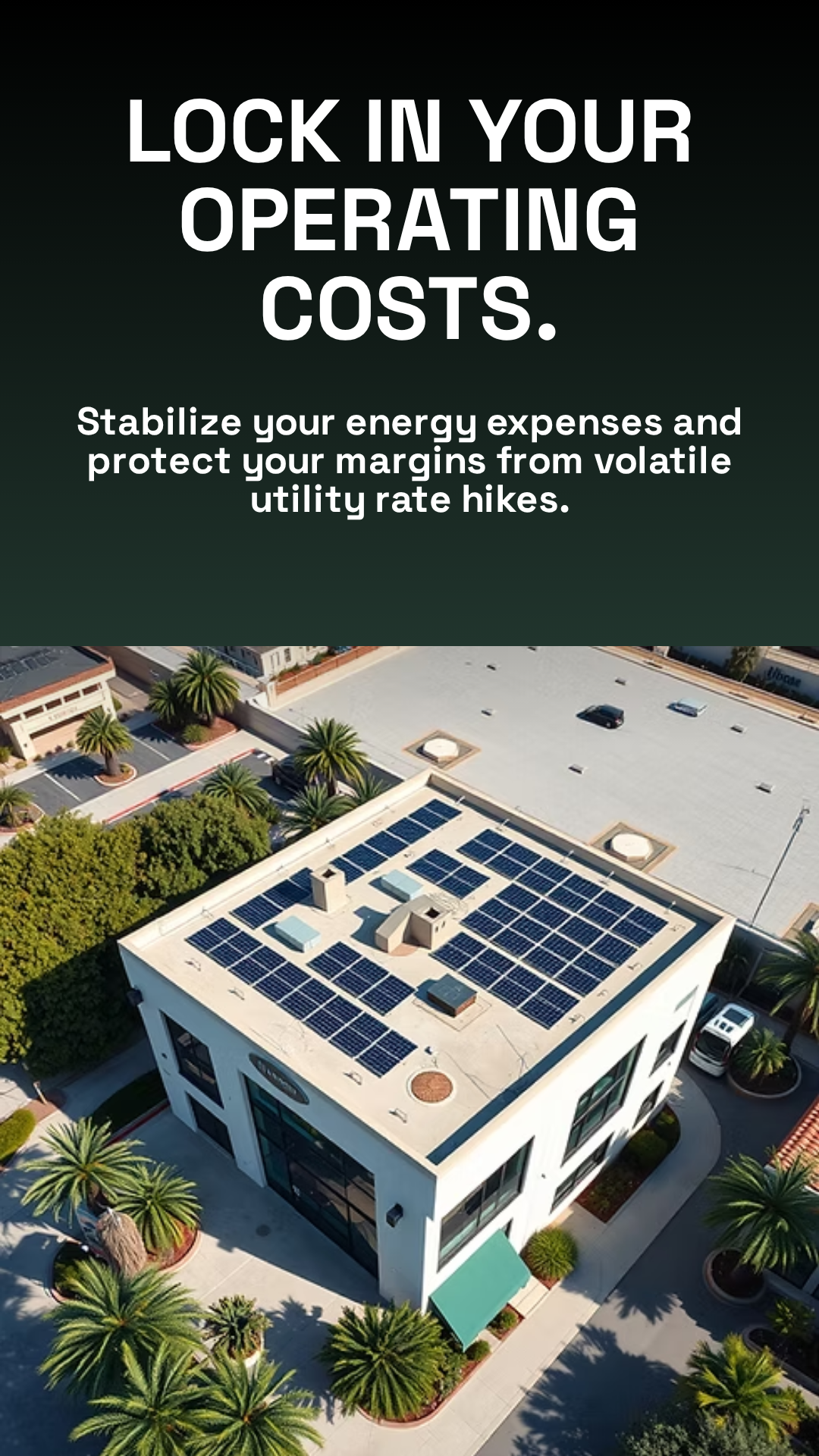
Solar energy offers multiple financial benefits, making it a compelling choice for commercial properties. From improving cash flow to leveraging tax credits, the advantages are clear.
Analyzing Payback Period and Cash Flow
The payback period for solar installations is a critical metric. It tells you how long it will take to recover your solar investment through energy savings. A shorter payback period means quicker cash flow improvement, freeing up capital for other business initiatives. This is why understanding cash flow dynamics post-solar installation is essential for financial planning.
Leveraging Investment Tax Credit ITC
The ITC is a powerful tool for reducing solar project costs. By covering a significant portion of the installation expenses, it enhances the financial feasibility of going solar. Businesses can deduct a percentage of their solar energy system costs from their taxes, making it a smart financial move.
Exploring MACRS Bonus Depreciation
The Modified Accelerated Cost Recovery System (MACRS) allows businesses to recover investments in solar through tax deductions. Bonus depreciation can further accelerate this process, providing additional tax benefits in the early years of a solar investment. This enhances the financial attractiveness of solar projects.
Incentive Strategies and Management

Managing incentives effectively ensures you capture the full financial benefits of your solar investment. Proper management involves understanding and navigating various programs.
Navigating Inflation Reduction Act Incentives
The Inflation Reduction Act provides opportunities for additional incentives. Navigating these incentives requires understanding the specific eligibility and application processes. Properly managing these incentives can result in substantial cost reductions for your solar project.
Exploring Nonprofit and Municipal Solar Projects
Nonprofits and municipalities have unique opportunities for solar projects. Exploring these opportunities can reveal special incentives that make solar a viable option for these entities. Understanding these unique projects can open the door to sustainable energy solutions that align with organizational goals.
Requesting a Free Custom Report
A custom energy savings report tailored to your specific needs can provide valuable insights. This report can identify potential savings and outline a roadmap for solar adoption. Requesting this report is a smart step toward making informed decisions about your energy strategy. For more information, consider visiting KW Engineering.
Frequently Asked Questions
What is the most important aspect of a commercial energy savings report?
A comprehensive utility bill analysis is crucial. It helps identify patterns and areas where energy consumption can be reduced, leading to cost savings.
How can federal solar incentives impact my solar investment?
Federal solar incentives like the ITC can significantly reduce the upfront cost of solar projects, enhancing the financial feasibility and speeding up the payback period.
Why should I consider a custom energy savings report?
A custom report provides tailored insights into potential energy savings and investment returns, allowing you to make informed decisions about adopting solar energy.